Buying Guides
What Size Outboard Motor Do I Need? Horsepower by Boat Length
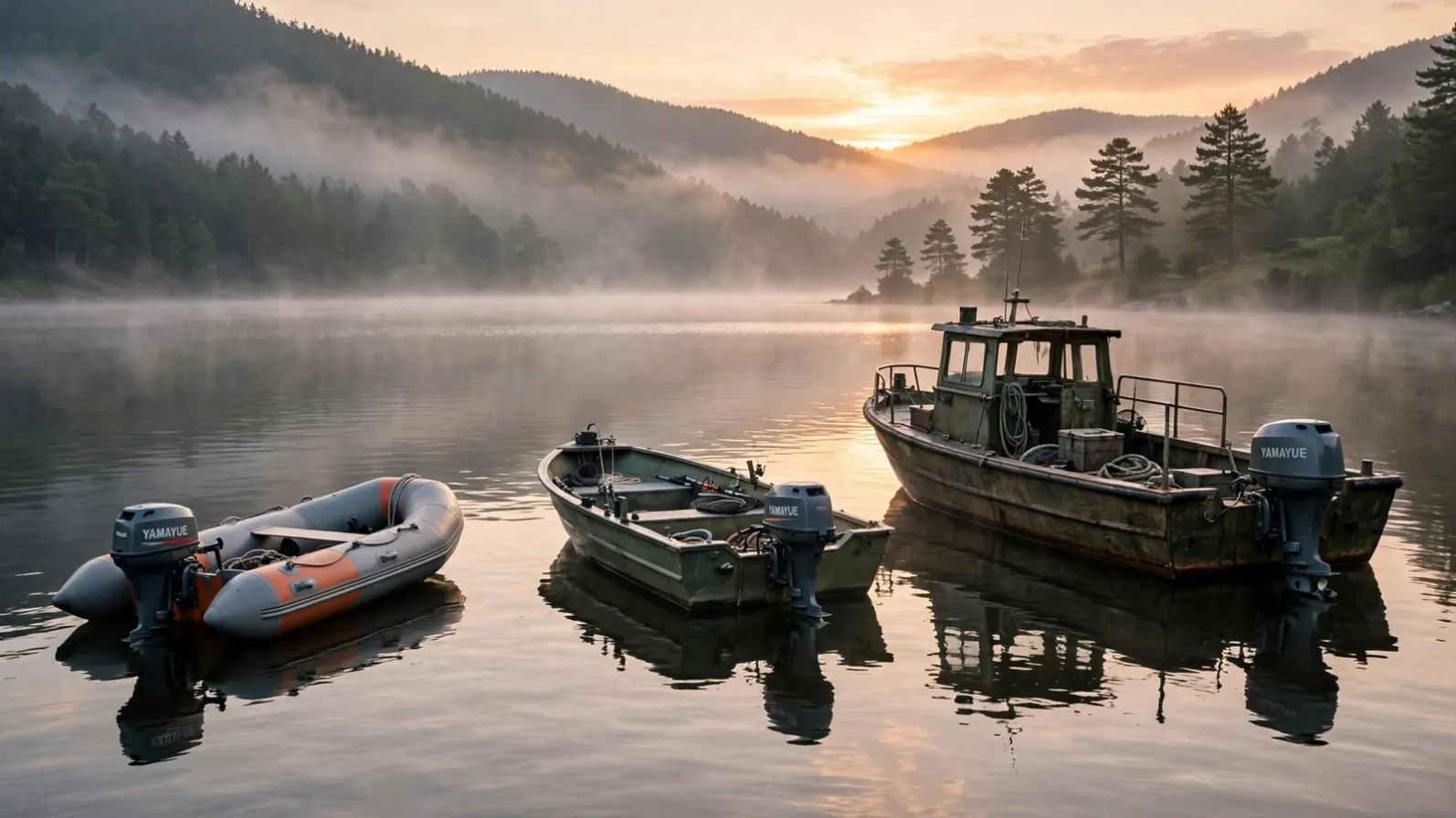
What size outboard motor do you need? Match horsepower to boat length, load and use with the YAMAYUE size guide from 6HP to 60HP. Request a wholesale quote.
Horsepower is the first decision in any outboard purchase, and the most common one to get wrong. Too little power and the boat will not plane with a full load. Too much and you add weight, fuel use, and cost for speed you cannot use.
This guide matches horsepower to boat length using only verified ratings from the YAMAYUE range, and explains the other factors — load and use — that move the answer up or down.
Three things that decide the horsepower
Boat length. Longer boats need more power. The ratings in this guide are grouped by boat length because length is the simplest starting point.
Weight and load. A light inflatable with one person needs far less power than the same length of heavy fishing boat with crew, gear, and catch. Always size for the loaded boat, not the empty one.
Use. A tender that putters to shore needs little power. A work boat that runs loaded, against current, all day needs more. Fishing, transport, patrol, and leisure use all point to different answers at the same boat length.
There is no single formula. Use the length ratings below as the starting point, then adjust for load and use — and check the boat's rating plate, which states the maximum horsepower the transom is built for. Never exceed it.
Small boats up to 4.5 metres: the 6HP class
For boats up to about 4.5 metres — dinghies, inflatable boats, and small tenders — the 6HP class is the usual answer. The 6HP 4-stroke is rated for boats of 3 to 4.5 metres. It is a 139cc single-cylinder motor weighing 27–28 kg, with a built-in 1.2 litre fuel tank and hand start, so there is no separate tank to carry.
The 6HP 2-stroke is the lighter option at 20–21 kg, with a 103cc engine, manual start, and tiller handle. It suits buyers who carry the motor to the boat by hand, or who mount and remove it for every trip.
Both are tiller-handle motors. Both suit calm water, short trips, and light loads. For a small inflatable used for fishing close to shore, either 6HP is a sensible match. For heavier loads on the same hull, step up to the 8HP or 9.9HP 2-stroke.
Mid-size boats, 4 to 6.4 metres: 15 to 25HP
The 4 to 6.4 metre band is the most common fishing-boat size, and the 15 to 25HP range covers most of it. The 15HP 4-stroke and the 20HP 4-stroke are both rated for boats of 4 to 6.4 metres. The 15HP 4-stroke is a 323cc motor weighing 56–57.5 kg, with manual or electric start and tiller or remote control. The 20HP 4-stroke is a 362cc motor weighing 58–60 kg, with the same start and control options.
The 2-stroke side offers the same band with less weight: the 15HP 2-stroke (246cc, 36–38 kg), the 9.9HP 2-stroke for lighter loads, and the 25HP 2-stroke (496cc, 53–57 kg) for heavier loads or longer runs. The 25HP 4-stroke is a 432cc carburetor model in the same band, for buyers who want 4-stroke running with mid-range power.
At this size, start and control choice starts to matter. Manual start with a tiller handle is standard on the smaller models. Electric start and remote control are available on the larger models — check the product page for the version you need, and read our shaft length guide before you order.
Larger boats, 6 to 14 metres and work boats
For larger boats, the 60HP class takes over. The 60HP 4-stroke is rated for boats of 6 to 14 metres. It is a 996cc motor weighing 154 kg, with manual or electric start and tiller or remote control, and a 55 cm shaft.
The 2-stroke side covers the same work with less weight: the 30HP 2-stroke (496cc, 53–58 kg), the 40HP 2-stroke (703cc), and the 60HP 2-stroke (849cc, 106–108 kg, long shaft only). These are the motors for larger fishing boats, work boats, and transport craft that run loaded every day. The Enduro 2-stroke models are built for hard daily commercial use — fishing fleets, patrol boats, and island transport.
Note that the 2-stroke models carry no published boat-length rating. If you are sizing a 2-stroke for a larger boat, send the boat length, hull type, and typical load in the RFQ and we will confirm the match before quoting.
Why more power is not always better
A bigger motor is not automatically a better motor. Four checks keep the decision honest.
The rating plate. Every boat has a maximum horsepower rating on its capacity plate. Fitting a motor above it is unsafe and can void insurance. Check the plate first.
Transom weight. A heavier motor changes how the boat sits and handles. The 60HP 4-stroke weighs 154 kg; the 60HP 2-stroke weighs 106–108 kg. Both need a transom built for the load.
Handling. Too much power on a light hull makes the boat hard to control at low speed and nervous at full throttle. The right motor gives full control across the speed range, not just top speed.
Fuel and cost. More horsepower burns more fuel and costs more to buy and service. Size for the load you actually carry, not the load you imagine.
If you are between two sizes, the deciding factor is usually load: a heavily loaded boat needs the larger motor; a lightly loaded boat is better served by the smaller one.
Three buyer examples
A 4 metre inflatable for lake fishing. One or two people, light gear, calm water. The 6HP class fits: the 6HP 2-stroke for the lightest carry weight, or the 6HP 4-stroke for quieter running and a built-in tank.
A 5 metre fishing boat with three people and gear. The mid-size band fits: the 15HP or 20HP 4-stroke, or the 15HP or 25HP 2-stroke if weight and simple servicing matter more. Check shaft length against the transom before ordering.
A 12 metre work boat carrying loads daily. The 60HP class fits: the 60HP 4-stroke for quiet, fuel-efficient running, or the 60HP 2-stroke where lower weight matters. Both are long shaft models.
If your boat falls outside these examples, send the boat length, hull type, and typical load in the RFQ. For the full decision — horsepower, stroke type, shaft length, and start method — read our selection guide.
Frequently asked questions
Q: What size outboard motor for a 4m boat?
A: The 6HP class. The 6HP 4-stroke is rated for boats of 3 to 4.5 metres, and the 6HP 2-stroke (20–21 kg) is the lightest option for a 4 metre inflatable or dinghy. For heavier loads on the same hull, consider the 8HP or 9.9HP 2-stroke.
Q: What size outboard motor for a 5m fishing boat?
A: 15 to 20HP for most 5 metre fishing boats. The 15HP and 20HP 4-stroke models are rated for boats of 4 to 6.4 metres. The 15HP and 25HP 2-stroke models cover the same band with less weight.
Q: What size outboard motor for a 6m boat?
A: It depends on load and use. A lightly loaded 6 metre boat suits the 15–20HP band. A heavily loaded or work-use 6 metre boat suits the 60HP class — the 60HP 4-stroke is rated from 6 metres. Check the boat's rating plate first.
Q: Is a bigger outboard motor always faster?
A: No. Speed depends on hull design, load, and propeller as well as horsepower. A motor above the boat's rating adds weight and fuel use without usable speed, and it can make handling worse. Size for the loaded boat, not for top speed alone.
Q: Should I choose a 2-stroke or a 4-stroke for my boat size?
A: Both types cover the full 6 to 60 HP range. Choose 2-stroke for lighter weight and simpler servicing, and 4-stroke for quieter running and better fuel economy. Compare them in our 2-stroke vs 4-stroke guide.
Request a wholesale quote
Tell us the boat length, the horsepower and shaft length, the quantity, the destination country and port, and whether you need OEM branding or export packing, and we will reply with a quote. Browse the 2-stroke range and the 4-stroke range, or start from a model: 6HP 2-stroke, 6HP 4-stroke, 15HP 4-stroke, 20HP 4-stroke, 60HP 2-stroke, 60HP 4-stroke. See all models on the outboard motors hub.