Maintenance & Care
Outboard Motor Maintenance: Flushing, Oil Changes and Winter Storage
Outboard motor maintenance: flushing after every trip, oil changes, fuel care, propeller checks and winter storage for 2-stroke and 4-stroke motors.
Most outboard failures are not manufacturing faults. They are salt, stale fuel, and skipped maintenance. The routine in this guide takes little time, needs no special tools for the basic steps, and applies to both 2-stroke and 4-stroke motors. Where the two types differ, the guide says so.
Always follow the owner's manual for your exact model. Service intervals, oil grades, and capacities vary by model, and the manual is the only source to use for them. The specification table on each YAMAYUE product page lists the figures published for that model.
The habit that protects every outboard
Salt water is the main enemy. Salt builds up in the cooling passages, corrodes metal, and stiffens moving parts. Fresh water, dirt, and sand cause slower damage of the same kind. The answer is a short routine after every trip, plus a deeper routine at the end of the season.
Three habits cover most of it: flush the cooling system after use, keep the fuel clean and fresh, and check the propeller and fasteners regularly. The sections below take each in turn, then finish with winter storage.
Flushing: after every trip, especially in salt water
Flush the motor with fresh water after every saltwater trip, and regularly after freshwater use.
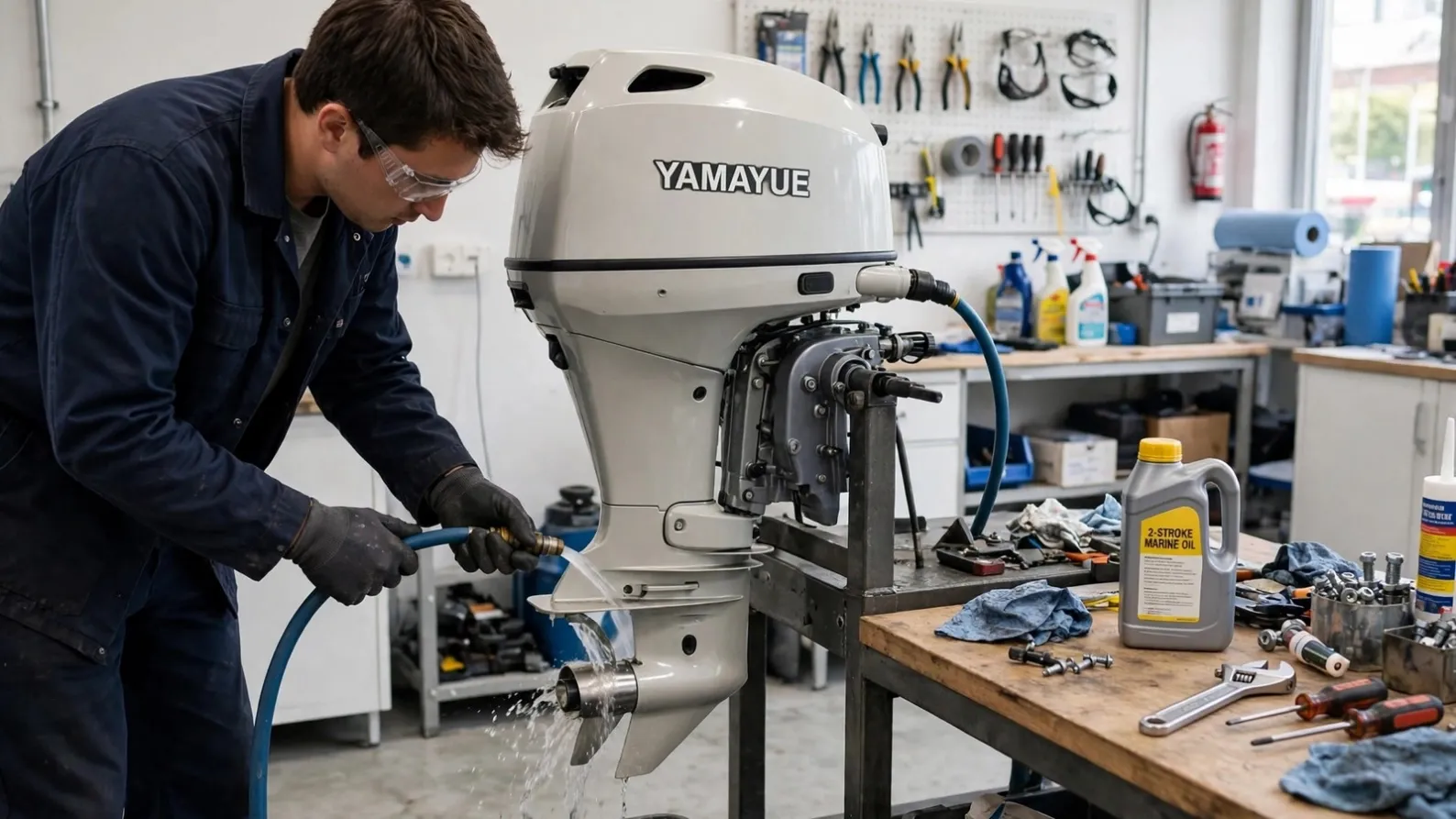
- Connect a fresh water supply using flushing muffs over the water intakes, or the built-in flush port if your model has one.
- Start the motor and let it idle. Do not rev it hard on muffs.
- Let fresh water run through until the tell-tale stream runs clear and the motor reaches normal temperature.
- Stop the motor, then turn off the water.
Never run the motor without a water supply. Even a short dry run can damage the water pump impeller. If the tell-tale stream is weak or missing, stop and check the intakes for blockage before running again.
Flushing takes a few minutes and prevents the salt build-up that causes overheating later. It is the highest-value maintenance step in this guide.
Oil: engine oil, gear oil, and premix
4-stroke motors have engine oil in a sump, like a car. Change it on the schedule in the owner's manual, and check the level before each trip. If the oil looks milky or smells of fuel, change it and find the cause before running again — milky oil means water is getting in.
All motors have gear oil in the lower unit. Check it on the schedule in the owner's manual. Milky or grey gear oil means water has entered the gearcase, usually past a seal. Have the seals checked before the next season.
2-stroke motors have no engine oil sump. They run on premixed fuel and oil. Mix at the ratio stated in the owner's manual and use the recommended oil. Do not guess the ratio, and do not use a ratio from another brand's motor.
Oil grades, capacities, and change intervals are model-specific. Do not copy them from another model. Check the owner's manual and the specification table on the product page for your motor.
Fuel system care
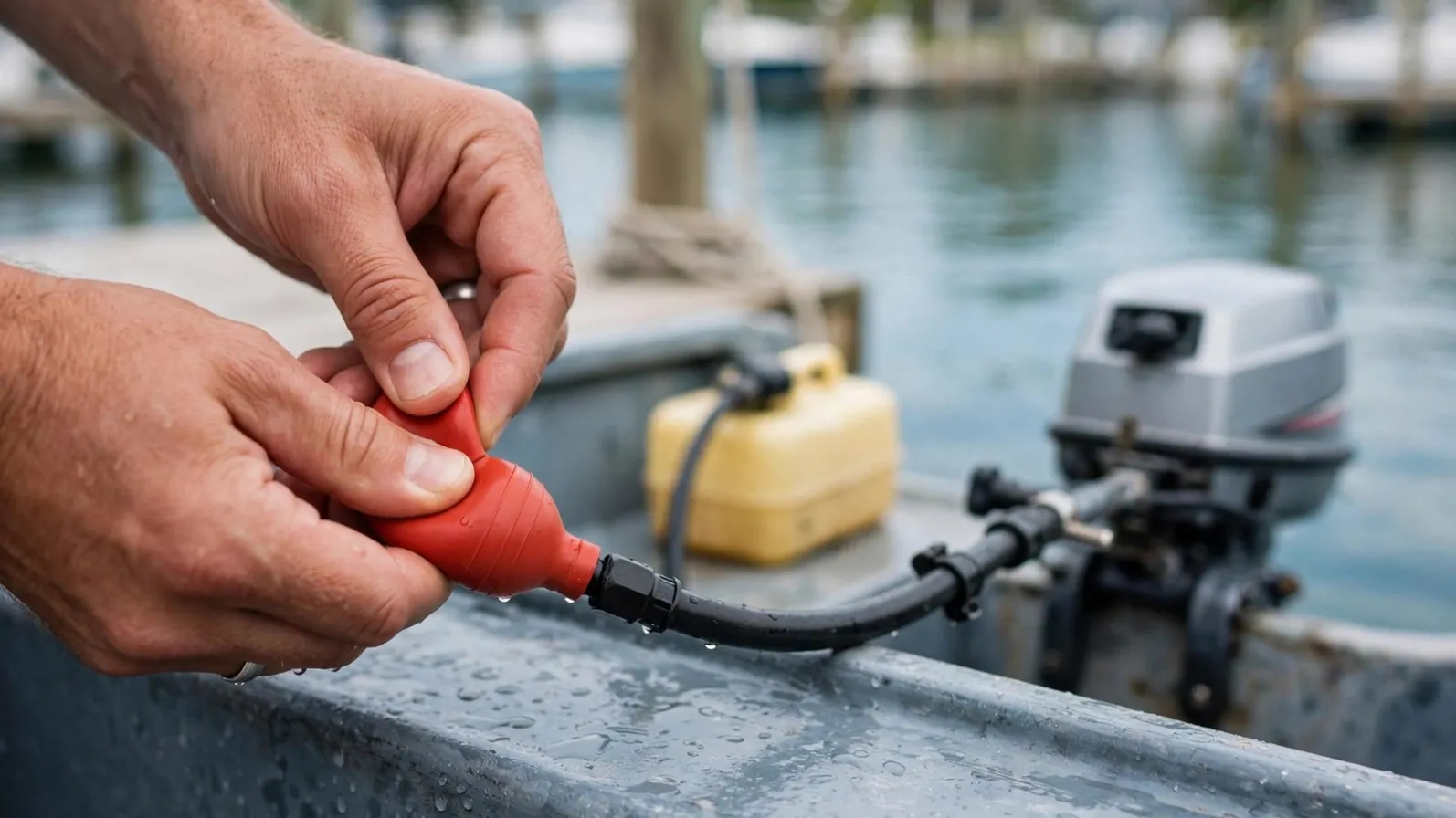
Stale fuel causes more starting problems than any other single fault. Use fresh fuel, keep the tank and lines clean, and check the fuel line, primer bulb, and filter regularly for cracks, softening, or leaks.
For storage, follow the owner's manual: either drain the fuel system or treat the fuel as the manual directs. Carburetor models are sensitive to stale fuel left sitting in the carburetor, so do not leave untreated fuel in the system over a long lay-up.
Check the fuel tank for water before the first trip of the season. Water in fuel causes rough running and stalling, and it is often the real cause behind a "faulty" motor.
Propeller, anodes, and moving parts
Inspect the propeller regularly. Look for bent blades, chips, and fishing line wound behind the propeller hub — line can cut into the gearcase seal and let water into the gear oil. Remove the propeller to check behind it when you service the lower unit.
Check the sacrificial anodes. Anodes protect the metal parts from corrosion by wearing away themselves. Replace an anode when it is heavily pitted or reduced in size — do not paint over it, and do not wait until it is gone.
Grease the fittings the manual lists, and check steering, throttle, and gear cables for stiffness or fraying. Check the spark plugs on the schedule in the owner's manual, and check that all mounting bolts and the transom clamp are tight.
Winter storage, step by step
At the end of the season, winterize the motor before you put it away. Follow the winterizing steps in the owner's manual for your model — the outline below is the usual sequence.
- Flush the motor with fresh water, as above.
- Deal with the fuel system as the manual directs — drain or treat the fuel, and run the motor until the carburetor is empty if the manual says so.
- Change the engine oil (4-stroke) and check the gear oil, so the motor sits over winter with clean oil.
- Follow the manual's fogging or cylinder protection steps for long storage.
- Remove the propeller, check for fishing line, grease the shaft, and refit it.
- For electric-start models, disconnect the battery, charge it fully, and store it charged and dry.
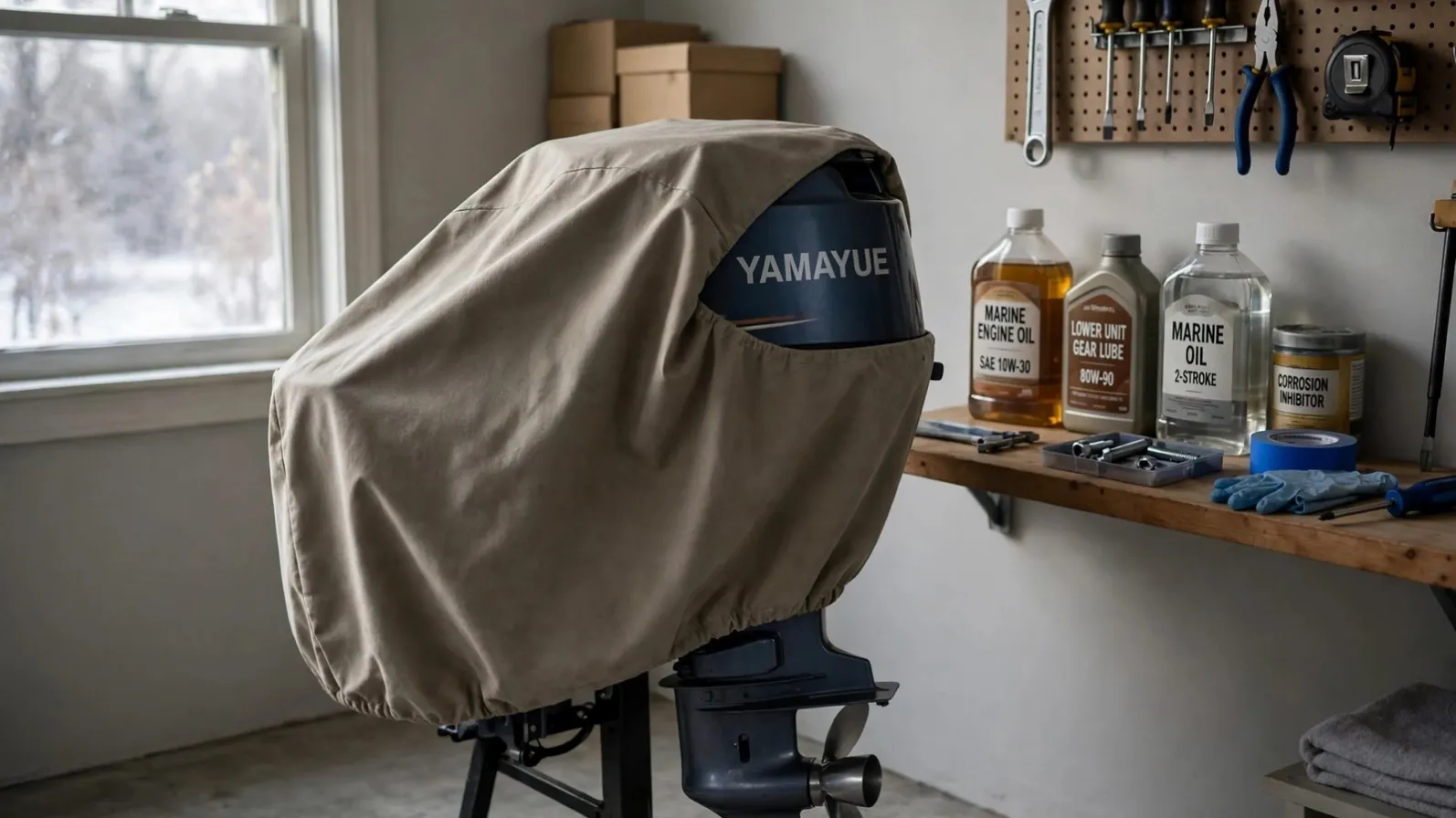
- Store the motor upright, or as the manual directs, in a dry, ventilated place under a cover. Do not store it where water can pool around the lower unit.
In spring, reverse the process: check the oil level, fuel system, propeller, anodes, steering, and battery before the first trip. A ten-minute check at the start of the season prevents most first-trip failures.
Frequently asked questions
Q: How often should I flush my outboard motor?
A: After every saltwater trip, without exception. In fresh water, flush regularly as well — after every few trips, and always before storage. Flushing takes a few minutes and prevents salt build-up in the cooling passages.
Q: How often should I change the oil in a 4-stroke outboard?
A: On the schedule in the owner's manual for your exact model. Intervals vary by model and use, so there is no single answer. Check the oil level before each trip, and change the oil at least at the end of each season.
Q: Does a 2-stroke outboard need an oil change?
A: A 2-stroke has no engine oil sump, so there is no engine oil to change. It runs on premixed fuel and oil. The gear oil in the lower unit still needs checking and changing on the schedule in the owner's manual.
Q: How do I winterize an outboard motor?
A: Flush it, deal with the fuel system as the manual directs, change the engine oil (4-stroke) and check the gear oil, follow the manual's cylinder protection steps, check the propeller and anodes, disconnect and charge the battery on electric-start models, and store the motor upright, dry, and covered.
Q: What should I check before the first trip of the season?
A: Oil level, fuel freshness and water in the tank, propeller and fishing line, anodes, steering and throttle cables, mounting bolts, and the battery on electric-start models. Fix anything you find before launching, not after.
Request a wholesale quote
Tell us the horsepower and shaft length, the quantity, the destination country and port, and whether you need OEM branding or export packing, and we will reply with a quote. Check the specification table on the product page for your model's figures. Browse the 2-stroke range and the 4-stroke range, or start from a model: 6HP 2-stroke, 15HP 2-stroke, 6HP 4-stroke, 9.9HP 4-stroke, 25HP 4-stroke, 60HP 4-stroke. See all models on the outboard motors hub. For buying decisions, read our selection guide.