Maintenance & Care
Outboard Motor Won't Start? Troubleshooting Guide for 2-Stroke and 4-Stroke
Outboard motor won't start? Check fuel, spark, battery, the safety lanyard and water flow before calling a dealer — for 2-stroke and 4-stroke motors.
Most no-start outboards are not broken. They are out of fresh fuel, running on a flat battery, or stopped by a safety switch nobody noticed. Work through the checks in this guide in order, from the five-minute items to the deeper ones, and most starting problems resolve without a dealer visit. The guide covers both 2-stroke and 4-stroke motors, and says where the two types differ.
Work safely. Do the checks with the motor off and the boat secured, keep fuel away from sparks and flames, and never bypass a safety switch to get the motor running. If a check calls for a part you do not have or a job beyond owner-level work, stop and call a dealer rather than improvising.
The five-minute checks first
Half of all no-start calls are one of five simple things. Check them before anything else, in this order.
- Safety lanyard. The kill switch lanyard must be clipped in place. If it is loose, missing, or pulled out, the ignition is cut and the motor will not fire at all. Push it firmly home and try again.
- Gear position. The motor must be in neutral to start. If the shift is in forward or reverse, the starter is locked out. Move the shift firmly into neutral and check the neutral indicator if your control has one.
- Fuel valve and tank vent. Open the fuel valve and open the tank vent on a portable tank. A closed vent stops fuel flow as the tank empties, and the motor starves a few minutes into a run — or refuses to start at all.
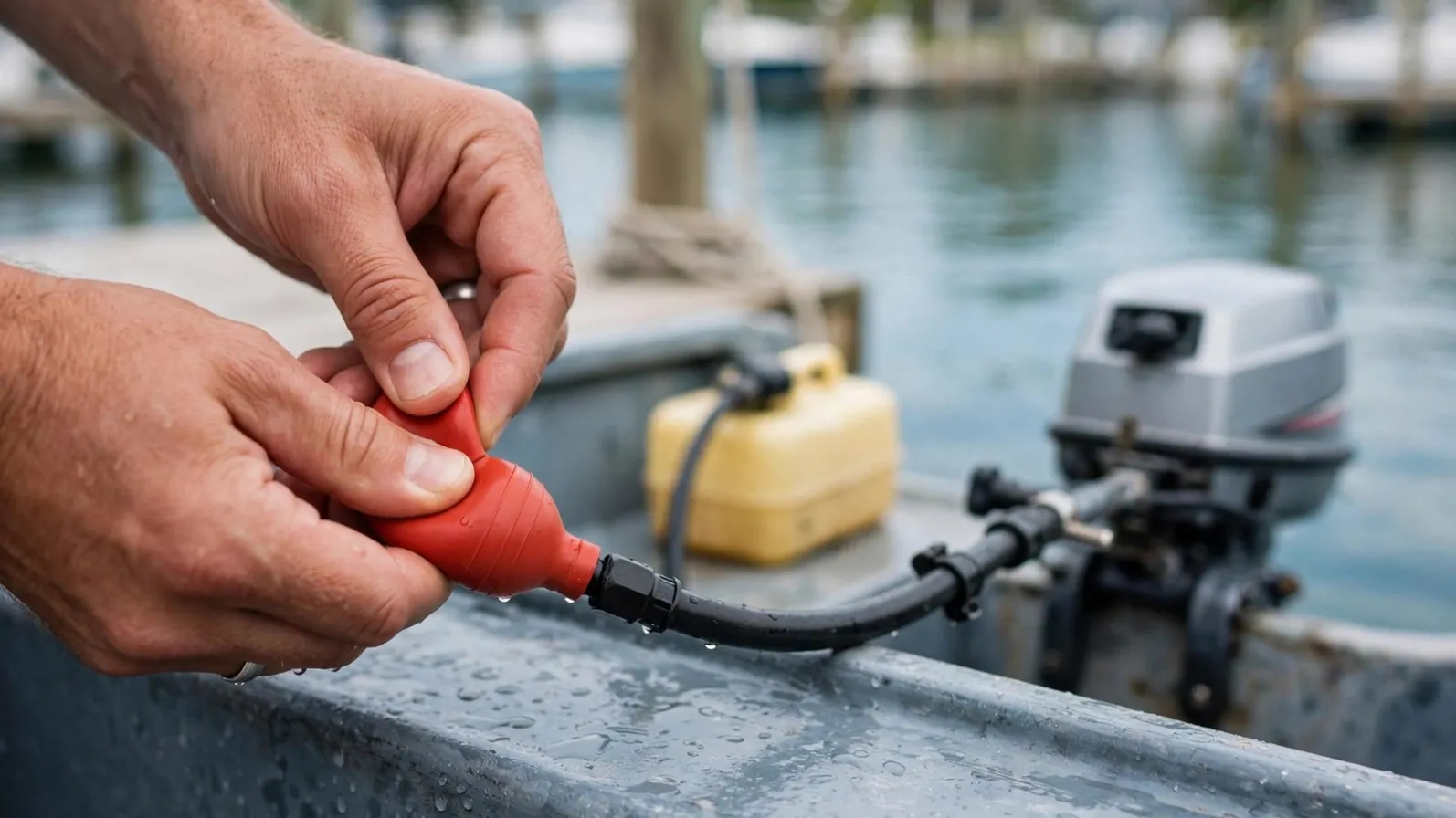
- Primer bulb. Squeeze the primer bulb until it feels firm. A soft bulb that never firms up means the fuel line is not drawing fuel — check for a cracked line, a loose connection, or an empty tank. A bulb that firms up and then goes soft again points to a leak or a blocked filter.
- Battery connections. On electric-start models, check that the battery terminals are clean and tight and that the battery is charged. Corroded or loose terminals cause the most common electric-start failure: a click, or nothing at all, when the key turns.
If all five check out and the motor still will not start, move on to the fuel system.
Fuel: the most common cause
Stale fuel causes more starting problems than any other single fault. Petrol goes stale in weeks, not months, and carburetor models suffer first because stale fuel gums up the small passages inside the carburetor. Work through the table below, matching the symptom you see to the likely cause.
Symptom | Likely cause | What to do |
|---|---|---|
Engine turns over but never fires | Stale fuel, or no fuel reaching the carburetor | Replace with fresh fuel; check the primer bulb, fuel line, and filter |
Starts, then dies within seconds | Fuel starvation — blocked filter, closed vent, or air in the line | Open the vent, check the filter and lines, re-prime firmly |
Starts only with the choke held out | Lean mixture — partly blocked carburetor passages or stale fuel | Fresh fuel first; if it persists, the carburetor needs dealer attention |
Rough running and stalling | Water in the fuel, or a dirty filter | Check the tank for water; replace the filter; use fresh fuel |
Strong fuel smell, no start | Flooded engine | See the flooding steps in the next section |
On a 2-stroke, also check the fuel itself: is it premixed, and at the ratio in the owner's manual? A 2-stroke run on straight petrol has no lubrication, and one run on the wrong fuel can cause serious damage — but a motor that will not start on a fresh, correctly mixed tank has a fuel delivery problem, not a lubrication problem. On a 4-stroke, the same checks apply to straight petrol, and the fuel treatment used for storage must match what the manual directs. In both cases, do not keep cranking on stale fuel hoping it will clear. Drain it, replace it with fresh fuel, and start the checks again.
Spark and the carburetor
If fuel is reaching the engine and it still will not fire, the next suspect is the spark. Remove a spark plug and look at it. A plug coated in wet fuel points to flooding. A plug coated in black, dry soot points to a mixture that is too rich or a plug that has fouled. A plug with a cracked insulator or a worn electrode needs replacing. Replace plugs with the type and gap the owner's manual specifies, and check the plug lead and cap for cracks or corrosion while you are there.
A flooded engine is common after repeated failed starts with the choke out. The carburetor delivers fuel on every crank, and the excess fuel wets the plugs until they cannot spark. To clear a flooded carburetor engine, follow the owner's manual procedure — usually this means pushing the choke fully in, opening the throttle, and cranking in short bursts to clear the excess fuel, then returning the throttle to the start position and trying again with no choke. If the manual gives a different procedure, follow the manual.
Choke use matters. A cold engine needs the choke to start, but a warm engine started with the choke out will flood. If the motor ran recently and is still warm, try starting with no choke first. If it fires and dies, add a little choke and try again. Learning the choke habit for your own motor — how much, and for how long — prevents more failed starts than any other single habit. For the full routine that keeps plugs and carburetors clean, read our outboard motor maintenance guide.
Battery and electric start
On electric-start models, the battery is the next check. A battery that reads low, or terminals caked in corrosion, will not spin the starter fast enough to fire the engine, even if the lights on the panel come on. Clean the terminals, tighten the connections, and charge the battery fully before testing again. If the starter clicks once and nothing moves, the battery is usually the cause. If the starter spins strongly and the engine turns over but never fires, the problem is fuel or spark, not the battery — go back to the two sections above.
Check the battery's charge during the season, not only at the start. The alternator on the motor charges the battery while the engine runs — the 25HP 4-stroke, for example, has a 12V–16A alternator output — but it cannot recover a battery that was stored flat all winter. If the battery was stored discharged, charge it fully and have it tested before blaming the motor. A battery that will not hold a charge needs replacing, and no amount of cranking will fix that.
On manual-start models, the equivalent checks are the starter cord and the recoil mechanism: a cord that pulls unevenly or a recoil that does not rewind points to a mechanical fault in the starter itself, which is a dealer job. Do not force a stuck recoil — find the cause first.
Cooling and warning signs
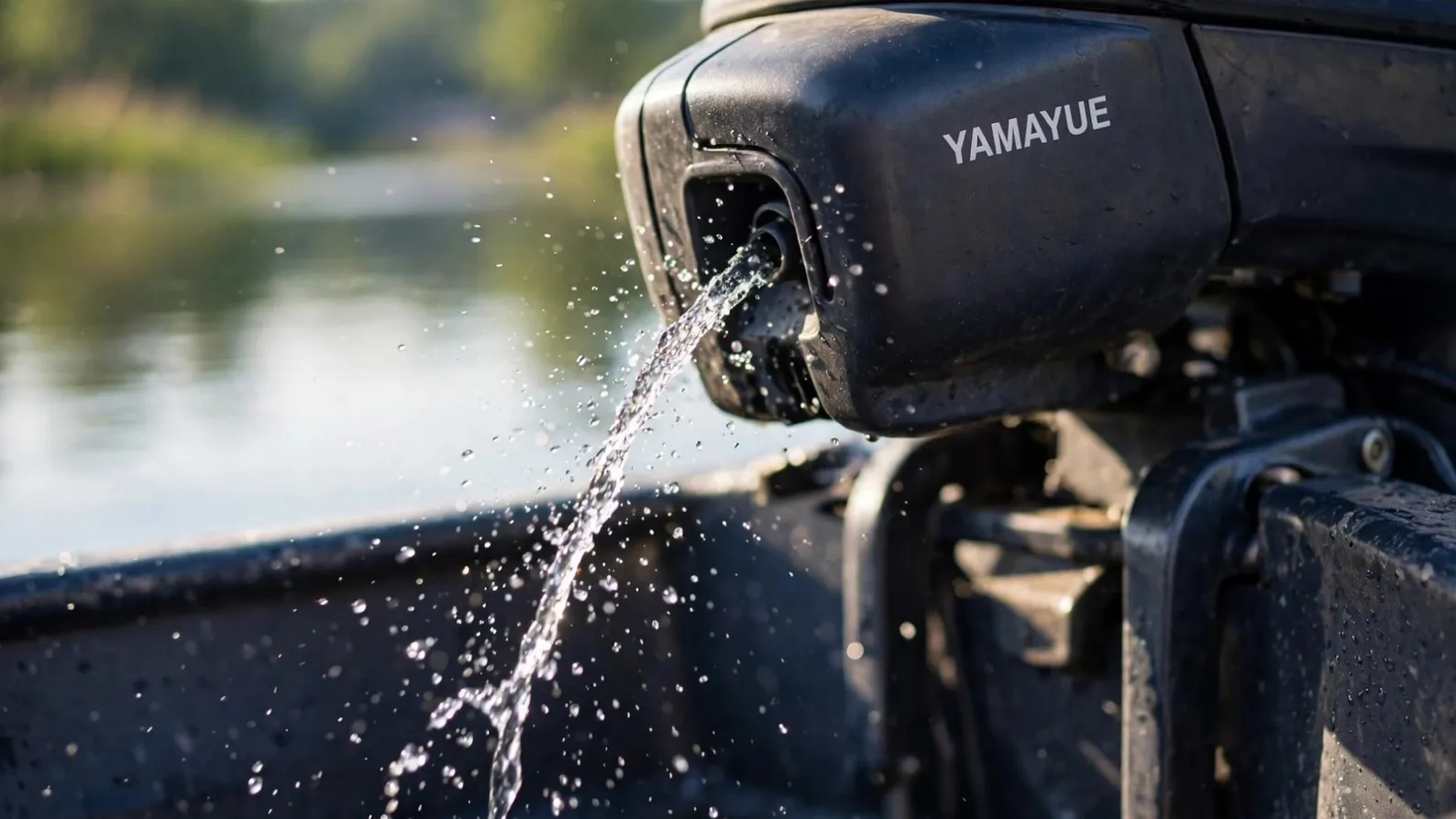
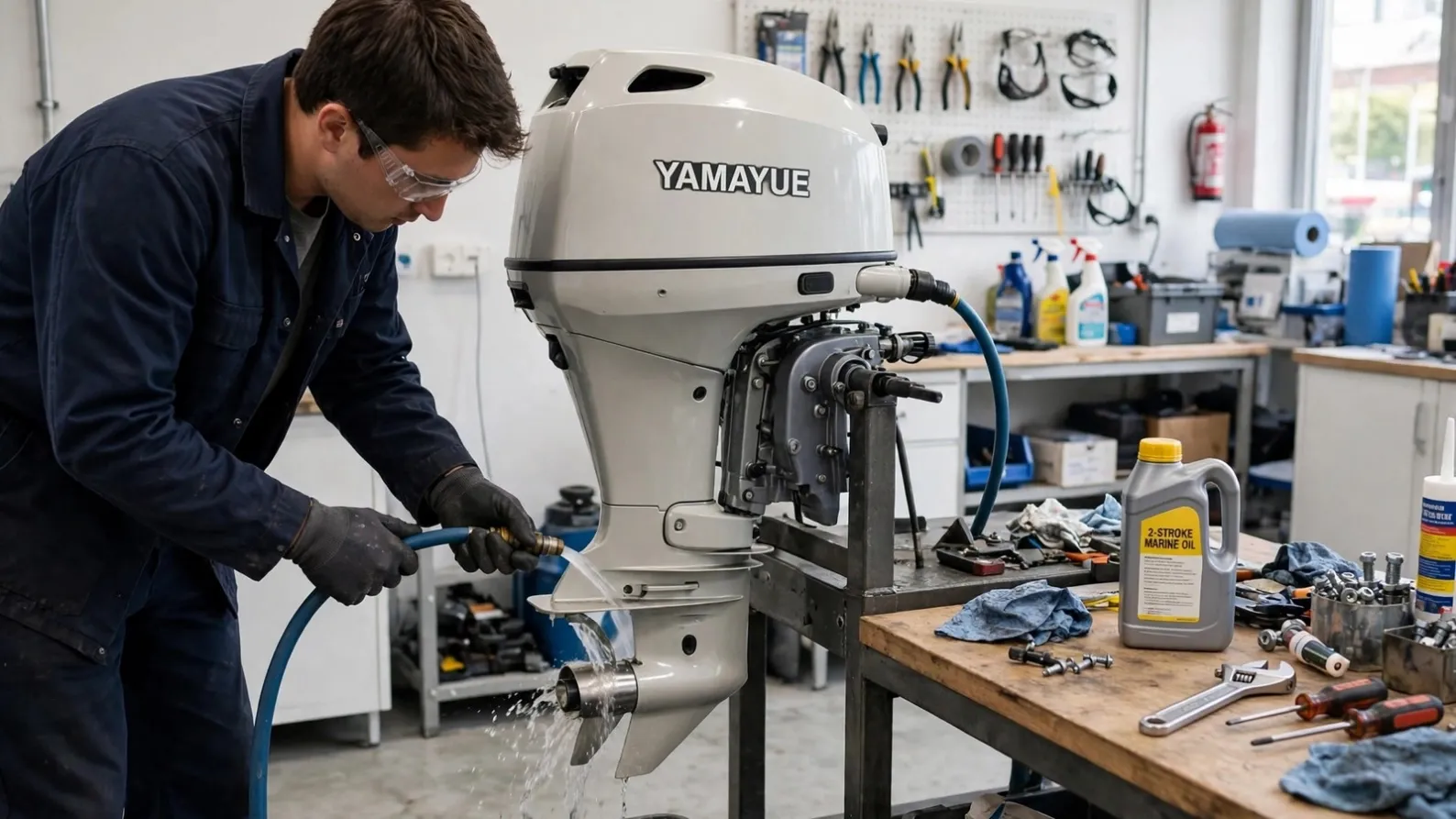
A motor that starts but stops, or that refuses to run above idle, may be protecting itself from overheating. The cooling system needs water flowing from the first revolution, and the tell-tale stream on the side of the motor shows that water is moving. If the stream is weak or missing, stop the engine and check the water intakes for weeds, mud, or a plastic bag. Never run the motor without a water supply, even to test a start — a short dry run can damage the water pump impeller.
If the intakes are clear and the stream stays weak, the cooling system needs attention before the motor is run again. Overheating can seize an engine, and a motor that has overheated once should be checked before its next run. Our guide to the water pump impeller and cooling system explains the impeller, the warning signs, and the replacement job. If the motor stopped after a long lay-up, also work through the spring checks in our winterizing guide — most post-storage starting problems are stale fuel, a flat battery, or a fouled plug.
When to stop and get a dealer
Stop and call a dealer when the checks above do not find the fault, or when the fault is inside the engine. Internal work — compression testing, carburetor rebuilding, gearcase seals, and anything that needs the powerhead opened — is dealer work, and guessing at it causes more damage than the original fault. Stop immediately, too, if you find fuel leaking anywhere, if the motor makes a new mechanical noise, or if it overheated and will not turn over freely.
Describe the symptoms when you call: what the motor does when you try to start it, what the fuel and battery checks showed, and what changed since it last ran well. A dealer who hears "turns over strongly, fresh fuel, firm primer bulb, no fire" starts in a different place from one who hears "clicks once and nothing moves." Good symptom notes save diagnostic time and get the motor back on the water sooner.
Frequently asked questions
Q: My outboard turns over but won't start. What should I check first?
A: Fuel, in this order: tank vent open, fuel valve open, primer bulb firm, fresh fuel in the tank, filter clear. Then check the safety lanyard, neutral position, and spark plugs. Most turn-over-but-no-fire cases are stale fuel or a fuel delivery blockage.
Q: My outboard does nothing when I turn the key. Is it the battery?
A: Usually, yes. Clean and tighten the battery terminals and charge the battery fully. A single click with no cranking points to a flat battery or a bad connection. If the battery is charged and the connections are sound, the starter circuit needs dealer attention.
Q: My outboard starts and then dies. What causes that?
A: Fuel starvation is the usual cause: a closed tank vent, a blocked filter, air in the line, or a primer bulb that will not stay firm. Check the vent, filter, and lines first, then re-prime and try again with fresh fuel.
Q: How do I clear a flooded outboard motor?
A: Follow the owner's manual procedure — usually choke fully in, throttle open, and short cranking bursts to clear the excess fuel, then return the throttle to the start position and retry with no choke. Avoid repeated choked starts on a warm engine, which is how flooding usually happens.
Q: My outboard only runs with the choke out. What does that mean?
A: The mixture is too lean without the choke, which usually means partly blocked carburetor passages or stale fuel. Start with fresh fuel. If the symptom persists, the carburetor needs cleaning by a dealer — do not keep running the motor on choke as a workaround.
Request a wholesale quote
Tell us the horsepower and shaft length, the quantity, the destination country and port, and whether you need OEM branding or export packing, and we will reply with a quote. Browse the 2-stroke range and the 4-stroke range, or start from a model: 6HP 2-stroke, 15HP 2-stroke, 6HP 4-stroke, 9.9HP 4-stroke, 25HP 4-stroke, 60HP 4-stroke. See all models on the outboard motors hub.