Product Knowledge
How Does a 2-Stroke Outboard Motor Work? Fuel, Oil, and Power Explained
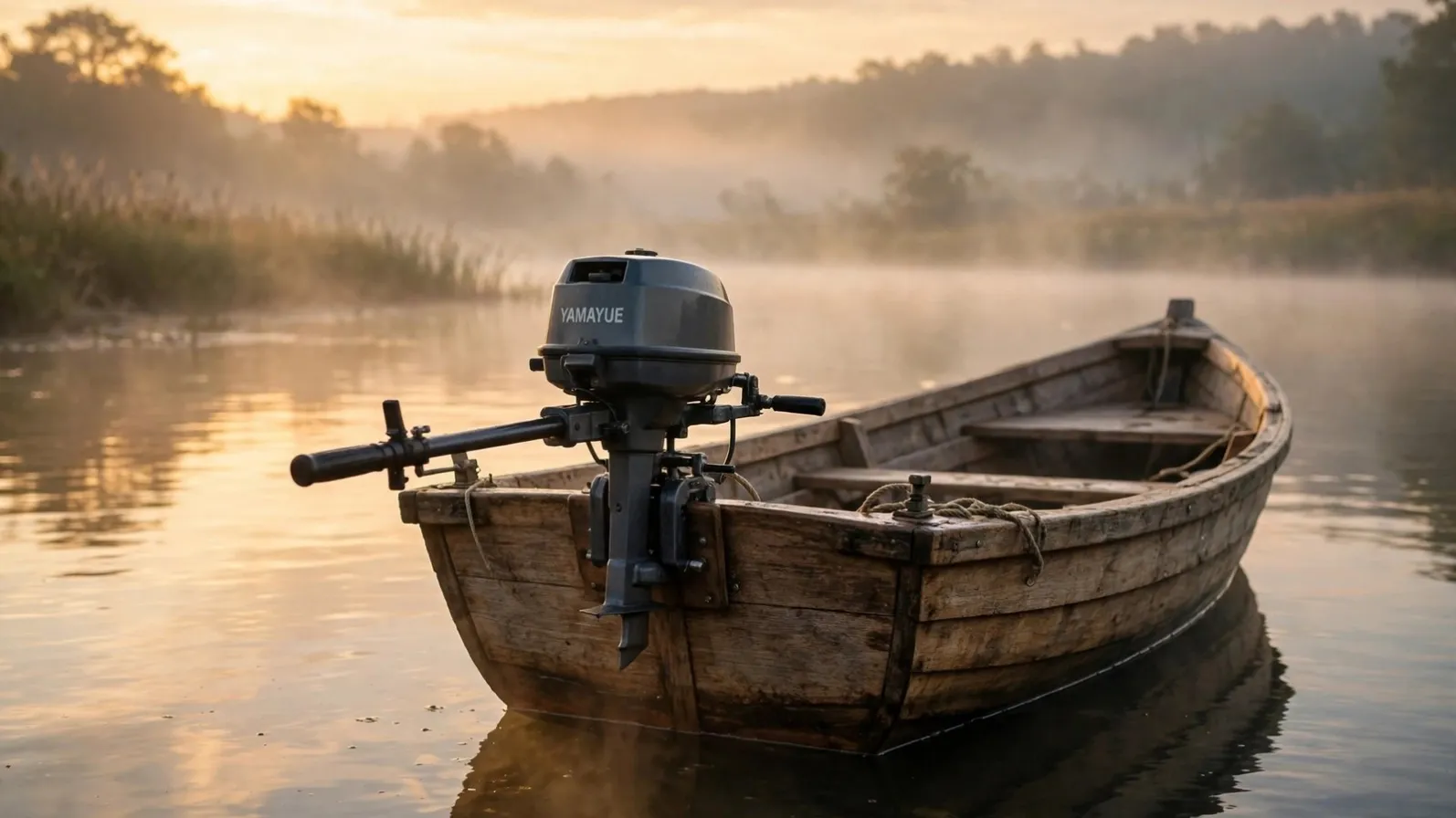
How a 2-stroke outboard motor works: the two-stroke cycle, premixed fuel and oil, and why the design is light and simple. Explained with real YAMAYUE specs.
A 2-stroke outboard is the simplest powered engine on the water. It has no valves, no oil sump, and no separate lubrication system. Fuel and oil enter together, the engine fires on every revolution, and the exhaust leaves through ports in the cylinder wall. That simplicity is why 2-stroke motors are light, easy to service, and still widely used on work boats and fishing fleets.
This guide explains the working cycle step by step, why oil must be mixed with the fuel, how the carburetor feeds the engine, and what the exhaust and cooling stream tell you about the motor's health. Every figure comes from the YAMAYUE product pages.
What happens inside a 2-stroke engine?
A 2-stroke engine completes its working cycle in two movements of the piston — one up, one down — which is one full turn of the crankshaft. A 4-stroke needs two full turns for the same cycle, so the 2-stroke fires twice as often at the same engine speed. That is the main reason a 2-stroke feels strong and responsive from a standing start.
On the upward stroke, the piston moves up the cylinder and compresses the fuel and air mixture trapped above it. At the same time, the underside of the piston draws a fresh charge of fuel and air into the crankcase below. There are no valves opening and closing. Instead, the piston itself covers and uncovers openings — called ports — in the cylinder wall as it moves.
Near the top of the stroke, the spark plug fires and the compressed mixture burns. The burning gas expands and drives the piston down. That downward movement is the power stroke. As the piston falls, it first uncovers the exhaust port, and the burnt gas escapes. A moment later it uncovers the transfer ports, and the fresh mixture stored in the crankcase flows up into the cylinder, pushing the last of the exhaust out ahead of it. Then the piston rises again, the ports close, and the cycle repeats.
Because the intake, compression, power, and exhaust steps overlap inside two piston movements, the engine has very few moving parts: a piston, a connecting rod, a crankshaft, and a spark plug per cylinder. There is no camshaft, no valve train, and no oil pump. Fewer parts means less weight and simpler servicing in the field — a real advantage for fleets that work far from a workshop.
Why does a 2-stroke need oil mixed with the fuel?
A 2-stroke has no oil sump, so there is no separate supply of engine oil. Instead, the oil travels with the fuel. Petrol and oil are mixed before they reach the engine, and the oil in the mixture coats the crankshaft bearings, the connecting rod, and the cylinder wall as it passes through. Some of the oil burns with the fuel. That is normal, and it is why a 2-stroke shows some exhaust smoke, especially at idle and low speed.
The mixing ratio is set by the engine maker and printed in the owner's manual for your exact model. Always use that ratio and the recommended oil. Do not copy a ratio from another brand's motor or from a different model, and do not guess. Too little oil leaves bearings and cylinder walls short of lubrication and can cause serious damage. Too much oil causes heavy smoke, fouled spark plugs, and deposits inside the engine.
Mix the fuel in a separate container, not in the boat's tank, and shake the container so the oil is spread evenly through the petrol. Use fresh fuel. Stale fuel causes more starting and running problems than any other single fault, and it affects carburetor models most. Label the container clearly so premixed fuel is never mistaken for straight petrol, and never run a 2-stroke on straight petrol — without oil in the fuel, the engine has no lubrication at all.
How does the carburetor feed the engine?
YAMAYUE 2-stroke models meter fuel through a carburetor. The carburetor mixes liquid fuel with air in the proportion the engine needs, using the airflow the engine itself draws in. When you open the throttle, more air flows through the carburetor, more fuel is drawn in with it, and the engine speeds up. When you close the throttle, airflow and fuel fall together and the engine slows to idle.
For a cold start, the carburetor has a choke. The choke restricts airflow so the mixture becomes richer — more fuel relative to air — which a cold engine needs to fire. Once the engine is warm, the choke is pushed back in and the mixture returns to normal. A primer bulb in the fuel line is squeezed before starting to fill the carburetor with fuel. If the bulb stays soft or the engine will not prime, check the fuel line, the tank vent, and the filter before looking anywhere else.
Carburetors are simple and well understood, which is part of their appeal on work boats. They do need clean, fresh fuel. Fuel left sitting in a carburetor over a long lay-up can gum up the small internal passages, so follow the storage steps in the owner's manual — drain or treat the fuel as the manual directs — and read our outboard motor maintenance guide for the full routine.
Why is a 2-stroke lighter than a 4-stroke?
The weight difference comes straight from the parts list. A 2-stroke has no valves, no camshaft, no oil sump, and no oil pump, so at the same horsepower it carries less metal. The gap grows as horsepower rises, because the parts a 4-stroke adds get bigger with the engine.
Model | Displacement | Weight |
|---|---|---|
6HP 2-stroke | 103cc | 20–21 kg |
6HP 4-stroke | 139cc | 27–28 kg |
15HP 2-stroke | 246cc | 36–38 kg |
15HP 4-stroke | 323cc | 56–57.5 kg |
60HP 2-stroke | 849cc | 106–108 kg |
60HP 4-stroke | 996cc | 154 kg |
Weight decides how a motor is handled. A 20–21 kg motor can be carried to the boat and mounted on the transom by one person. A 56 kg motor needs two people or a lifting aid. On tenders, inflatable boats, and small fishing boats that are launched by hand, that difference matters every day. On larger boats with a fixed mount, weight matters less, and the 4-stroke's quiet running and lower fuel use start to count. Weight varies between shaft and start versions of the same model, so always check the specification table on the product page. For a full comparison of the two stroke types, read 2-stroke vs 4-stroke outboard motors.
What should the exhaust and cooling stream look like?
A healthy 2-stroke shows two things every time it runs: a light haze of exhaust smoke and a steady tell-tale stream of cooling water from the side of the motor. Learn what normal looks like on your motor, because changes in either one are the earliest warnings of trouble.
Some smoke is normal. The oil in the fuel has to go somewhere, and part of it leaves as smoke, most visibly at idle and just after starting. Smoke that suddenly becomes much heavier usually means the fuel mix is too rich in oil, the fuel is stale, or a spark plug is fouled. Blue-grey smoke on a motor that was running cleanly the day before is worth checking before the next trip, not after.
The tell-tale stream matters more. It shows that cooling water is flowing through the engine. Check it every time you start the motor. If the stream is weak or missing, stop the engine and check the water intakes for weeds, mud, or a plastic bag before running again. Never run the motor without a water supply — even a short dry run can damage the water pump impeller. If the stream stays weak with clear intakes, the cooling system needs attention; our guide to the water pump impeller and cooling system explains what to check.
Which 2-stroke models does YAMAYUE offer?
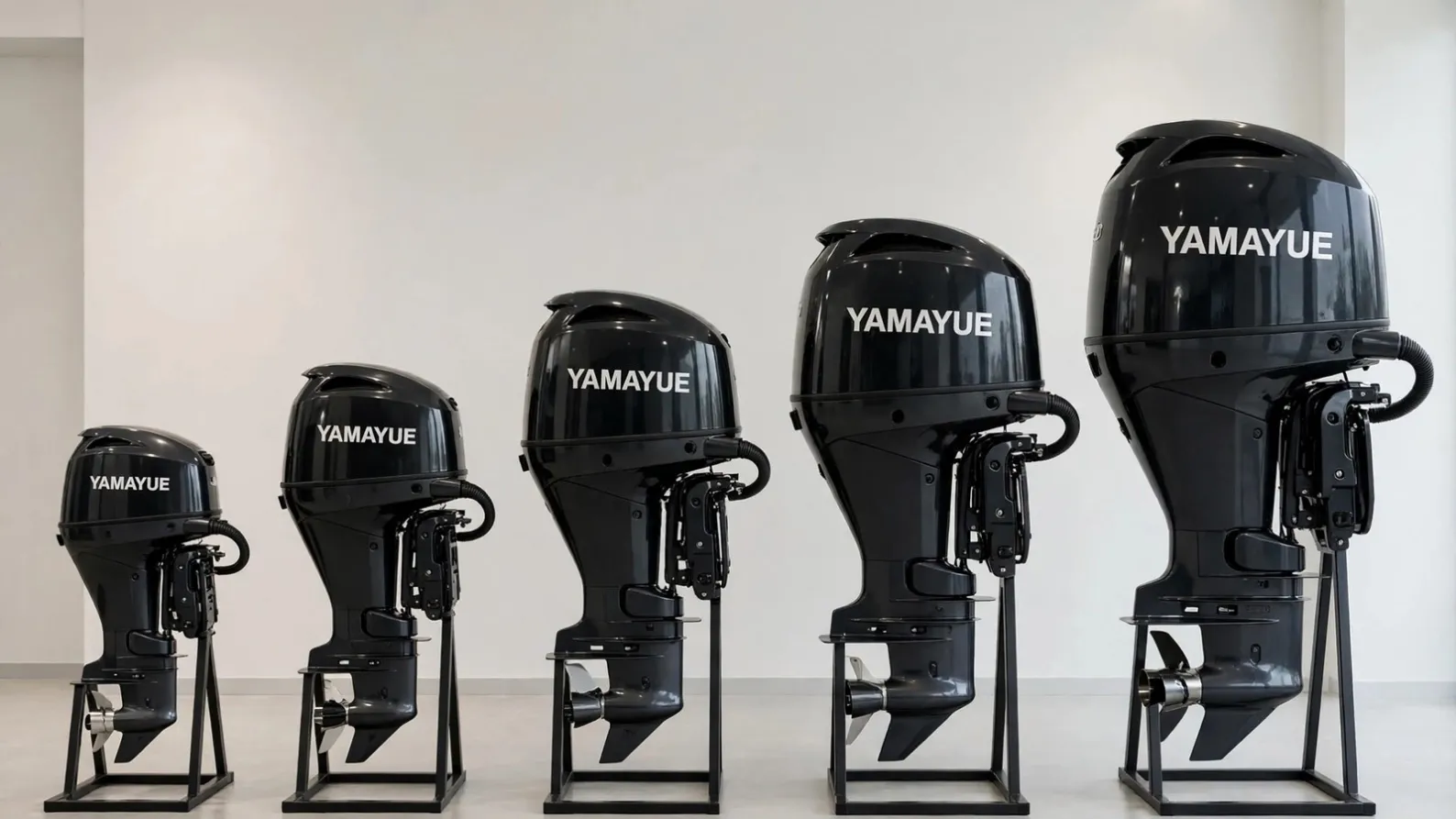
The YAMAYUE 2-stroke range covers 6 to 60 HP, with manual start and tiller handle on the small models and electric start and remote control options on the larger ones. Displacement and rated output rise together through the range, and every model runs on premixed fuel and oil through a carburetor.
Model | Displacement | Rated output |
|---|---|---|
6HP 2-stroke | 103cc | 4.4 kW |
8HP 2-stroke | 212cc | 5.9 kW |
9.9HP 2-stroke | 169cc | 7.3 kW |
15HP 2-stroke | 246cc | 11 kW |
25HP 2-stroke | 496cc | 18.4kW @ 5000 rpm |
30HP 2-stroke | 496cc | 22.1 kW |
40HP 2-stroke | 703cc | 29.4 kW |
60HP 2-stroke | 849cc | 44.1 kW |
Shaft lengths are short 440 mm and long 567 mm on the 6, 8, 9.9, and 15HP models; short 423 mm and long 550 mm on the 30HP; short 424 mm and long 550 mm on the 40HP; and long 521 mm only on the 60HP. The range also includes a 25HP 2-stroke; its specification table is on its product page. Enduro versions of several models are built for hard daily commercial use — fishing fleets, patrol boats, and island transport. If you are matching a motor to a boat, our selection guide walks through horsepower, shaft length, and start method, and our cc vs horsepower explainer explains what displacement figures mean.
Frequently asked questions
Q: How does a 2-stroke outboard motor work?
A: The piston completes the working cycle in two movements — one up, one down — which is one turn of the crankshaft. The piston covers and uncovers ports in the cylinder wall to let the fuel and air mixture in and the exhaust out. The engine fires on every revolution, with no valves and no oil sump.
Q: What is the fuel mix ratio for a 2-stroke outboard motor?
A: Use the ratio stated in the owner's manual for your exact model, with the recommended oil. Ratios vary by model, so do not copy a ratio from another motor or guess. Mix in a separate container and shake it so the oil spreads evenly through the petrol.
Q: Can I run a 2-stroke outboard on straight petrol?
A: No. A 2-stroke has no oil sump, so the oil mixed into the fuel is the engine's only lubrication. Running on straight petrol starves the bearings and cylinder wall of oil and can cause serious damage very quickly.
Q: Why does my 2-stroke outboard smoke?
A: Some smoke is normal, because the oil in the fuel partly burns and leaves as exhaust, most visibly at idle. Smoke that suddenly becomes much heavier usually means too much oil in the mix, stale fuel, or a fouled spark plug. Check the mix, the fuel, and the plugs before the next trip.
Q: Does a 2-stroke outboard need an oil change?
A: A 2-stroke has no engine oil sump, so there is no engine oil to change. The gear oil in the lower unit still needs checking and changing on the schedule in the owner's manual. Follow the full routine in our outboard motor maintenance guide.
Request a wholesale quote
Tell us the horsepower and shaft length, the quantity, the destination country and port, and whether you need OEM branding or export packing, and we will reply with a quote. Browse the 2-stroke range and the 4-stroke range, or start from a model: 6HP 2-stroke, 8HP 2-stroke, 15HP 2-stroke, 40HP 2-stroke, 60HP 2-stroke. See all models on the outboard motors hub.